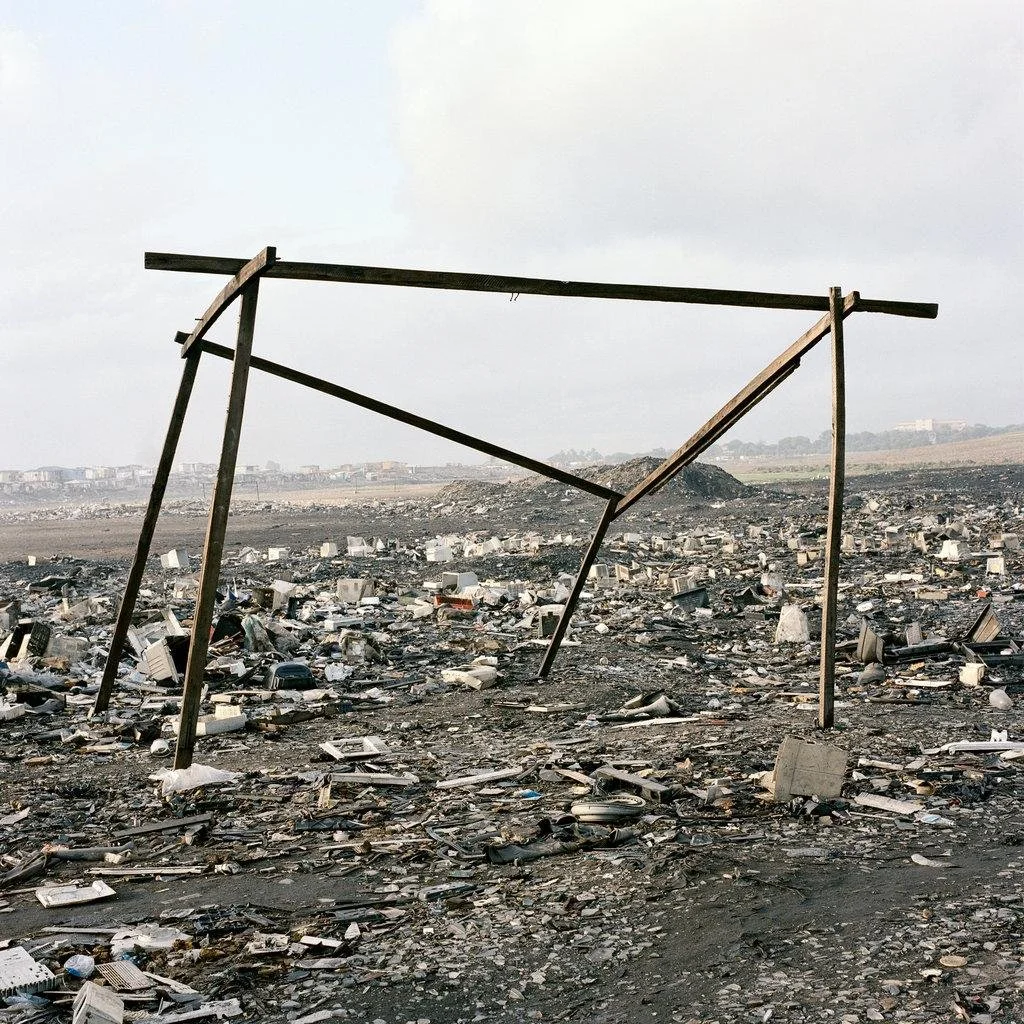
Nick Bilton, “Bits Pics: A Global Graveyard for Dead Computers” (New York Times: August 16, 2010)
Quarry of Thought:
Emerson and AI
The Dial 3.1 (2026): 1-20
What can Emerson teach us about artificial intelligence?
Today we recognize that large language models and intensive computing systems like AI are indexical technologies used to capture knowledge and harvest user data from boardrooms to classrooms. But seeing AI as a constellation of mineral resources with enormous environmental and cognitive costs is a less familiar story, one that requires a look to the past, to the nineteenth century, and to Emerson in particular. Attentive to the materiality of social life as much as transcendental abstractions, Emerson writes often about the intersection of the geological and the technological: how, for example, minerals and stones provide physical infrastructures for modernity but also invite a philosophical reimagining of familiar concepts such as intellect and creativity beyond exclusively human-centered definitions.
Focusing on his 1860 essays “Power” and “Wealth,” alongside the poem “Ever the Rock of Ages Melts” – written in 1857 but unpublished in his lifetime – and the late lectures in Natural History of the Intellect (1871), this essay charts how Emerson understood minerality’s historical relation to knowledge. For Emerson, the mineral is a multi-scalar geological assemblage that makes the technological imagination possible, shaping the boundaries of what can be thought and demonstrating how wealth and power interanimate one another, literally and figuratively. The essay argues that Emerson’s writings reveal certain insights about the geontological conditions of modernity through the affordances of literary forms that play with non-anthropomorphic perspectives and non-human meaning making. This Emersonian frame helps to situate the appearance of AI in wider technological and natural histories so we are better able to theorize what might be termed the infrastructures of minerality, or the conditions of thinking under and with regimes of extractive technologies that suffuse our experiences of the world.